The Camden roadblock shootout
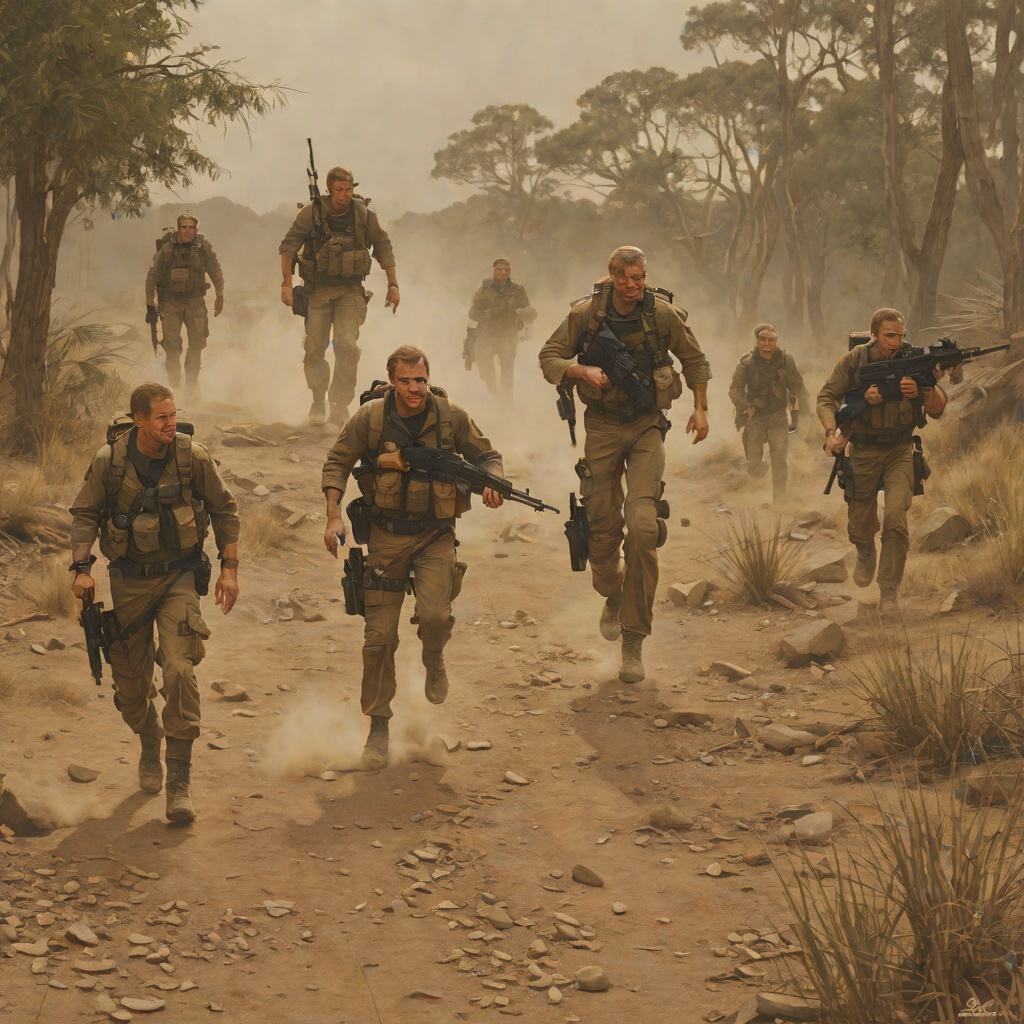
The Running ManThe Camden roadblock shootout is the roadside battle near Camden in which Ben Richards and Amelia Williams try to penetrate a police checkpoint during their flight from the authorities. It is a decisive reversal: what begins as a carefully staged hostage passage becomes a running exchange of gunfire, leaves Ben injured, destroys two police cruisers, and confirms that official forces intend to kill rather than safely recover either person. The episode also sharpens the book’s central conflict between a hunted individual and a system that has already defined him as a public monster.
Causes and Background
The confrontation follows a long drive through Maine. Ben and Amelia have traveled more than a hundred miles from the place where he first hitched a ride with her, reaching the coastal town of Camden before continuing toward Augusta, the state capital. Ben warns her that the authorities may detect them there, but he insists that he has no interest in killing her. Amelia answers that he needs a hostage, identifying the moral and practical terms of their alliance: she is not a willing accomplice, yet her presence is the condition that may let him pass a police search alive.
The approach to Camden is governed by concealment and timing. Amelia drives while Ben lowers himself in the seat so that only the top of his head can be seen, waiting for the blue lights he expects in Augusta. None appear, and the pair continue for another hour and a half along the ocean, past fields, bridges, and heavy firs. The landscape is unusually bright after the constant rain around Harding, with sharply defined forms and stark shadows. That clarity gives the coming violence an almost diagrammatic quality: the road, the checkpoint, the vehicles, and the positions of the troopers are all visible, yet visibility cannot produce safety.
The Checkpoint and the Failed Bluff
The roadblock appears not far from the Camden town line, where two police cars stand on opposite sides of the road while two officers inspect an old pickup truck and wave it through. Ben instructs Amelia to drive another two hundred feet and stop, placing the air car fifty feet from the checkpoint. He relies on a controlled display of vulnerability rather than an immediate attack. Amelia is pallid but outwardly composed, and she applies the brakes evenly, following his instructions with the resignation of someone who understands that every available choice is dangerous.
Amelia then opens the door, leans out, and asks the officers not to shoot. Her cultured voice contrasts with her white knuckles and the pulse fluttering in her throat, while the open door allows Ben to smell pine and timothy grass outside the vehicle. When an officer orders both her and her passenger to emerge with their hands over their heads, Amelia identifies herself clearly and states that Ben is holding her hostage. She says that he will kill her if the police do not grant him free passage. The claim is designed to make the officers hesitate, but it also places Amelia between Ben’s threat and the state’s presumed right to use force.
The police response is immediate and mechanical. The clipboard falls to the road as both officers kneel almost simultaneously, draw their guns, and brace their firing hands with the other hand. Their synchronized posture makes the checkpoint resemble a programmed procedure rather than a negotiation. Ben shouts for Amelia to drive. When she hesitates because she believes the officers will not let them through, he presses his injured foot onto her right shoe, producing a sharp flare of pain from his broken ankle, and forces the car forward.
The Exchange of Gunfire
The air car tears toward the gap between the two police vehicles. Two hollow impacts strike the body of the car, and the windshield bursts inward, scattering safety glass over Ben and Amelia. She raises both hands to shield her face while Ben leans against her and swings the wheel. They pass between the police cars with barely any contact, catching only a brief glimpse of the troopers turning to fire again. The escape is therefore not a clean evasion but a passage through a narrowing corridor of deliberate violence.
A further bullet punches through the trunk, and the car begins to fishtail. Ben counters the movement by whipping the wheel through diminishing arcs while Amelia screams. The damage to the vehicle turns the road into an unstable weapon: speed offers escape, but every shot threatens to make the car uncontrollable. Amelia later repeats in wonder that the officers had tried to kill them, a realization that marks the collapse of any remaining distinction between arrest and execution in her understanding of the encounter.
Ben leaves the disabled or endangered vehicle and moves back toward the road with his gun. He loses his balance and falls heavily, scraping both knees, but rises into a sitting position on the shoulder before the first cruiser crests the rise. The approaching car is moving at roughly eighty miles per hour and accelerating, driven by a pursuing officer who appears to see the chase as an opportunity for glory. Ben fires at the vehicle’s tire. The tire explodes, the cruiser veers across the shoulder, takes off in uncontrolled flight, and crashes into the opening of a huge elm. Its driver is thrown through the windshield and travels thirty yards before landing in the undergrowth.
The second cruiser arrives almost as fast. Ben needs four shots to find one of its tires, while two rounds strike the sand beside him. The cruiser spins in a smoking half-turn, rolls three times, and sprays the roadside with glass and metal. The scene reverses the expected hierarchy of pursuit: the police possess vehicles, numbers, and legal authority, but Ben uses a single pistol and his knowledge of the approaching line of travel to turn their momentum against them.
Wounds and Immediate Consequences
Ben does not escape untouched. After the first exchange, he sees his shirt darkening just above the belt, indicating a gunshot wound, and his side begins to throb in slow, aching cycles. His broken ankle remains a separate physical liability, grated when he forces Amelia’s foot down and later making him hop clumsily. He pants, makes involuntary whimpering noises, and struggles to remain upright. The violence therefore does not establish him as invulnerable; it records an escape bought through cumulative bodily damage.
The two cruisers are destroyed in succession, and the roadblock is transformed from a symbol of state control into wreckage. The immediate consequence is not merely that Ben and Amelia pass the checkpoint. The encounter demonstrates that the police fire first and continue firing after the fugitives have broken through, while Ben’s return fire is presented as a response to an advancing threat. Amelia’s change in perception is especially important. She entered the scene as a frightened driver compelled to perform the role of hostage; she leaves it with direct knowledge that the authorities were prepared to kill both of them.
Public Narratives and Significance
The shootout must be read against the public image already manufactured around Ben Richards. On The Running Man broadcast, Bobby Thompson presents Ben as a wolf among ordinary citizens, shows an altered portrait of him, and links him to the deaths of five policemen at the Boston Y.M.C.A. The program offers rewards for verified sightings and for sightings that result in a kill, turning public attention into an instrument of the manhunt. Thompson’s later framing casts Ben as a man who would mobilize malcontents to rape, burn, and overturn the streets, while Ben’s own words are manipulated through edited images and audio.
That propaganda frame makes the Camden encounter politically useful to the Network even before any official account is supplied. A roadblock can be represented as the reasonable containment of a dangerous fugitive, while the destroyed cruisers can be detached from the sequence of police fire that produced the confrontation. The event exposes how the same action changes meaning according to who controls the narrative: Ben’s shooting is treated as proof of criminal savagery, whereas the officers’ decision to kneel, aim, and fire is absorbed into the language of public protection.
The contrast extends to the social conditions Ben has been trying to expose. Bradley Throckmorton has described Boston’s pollution as reaching twenty on a good day and forty-two on a bad one, compared with an older scale on which factories were required to shut down at twelve. The cheap nose filters offered to ordinary people are ineffective, while the useful General Atomics models cost six thousand New Dollars. Cassie, Bradley’s five-year-old daughter, has cancer in both lungs, and Ben has argued that industrial pollution kills people whose deaths are officially recorded under safer diagnoses. Against this background, the sudden gunfire at Camden is an instance of fast violence inside a larger structure of slow violence: the state can produce immediate wreckage on the road while denying or obscuring the gradual deaths produced by air pollution.
The shootout also anticipates the later uncertainty surrounding the deaths of Sheila Richards and Catherine Sarah Richards. Dan Killian tells Ben that their deaths had nothing to do with the Network and were the result of a terrible accident, but Ben suspects the explanation precisely because it sounds too much like a lie. His first destination if he accepts Killian’s offer would be Co-Op City, where an hour on the streets could establish what really happened. The Camden battle thus occupies a crucial position between public accusation and private investigation. It gives Ben fresh evidence that official force is directed against him, while leaving the larger machinery of explanation and denial still in place.